
THE BRAND
HERITAGE
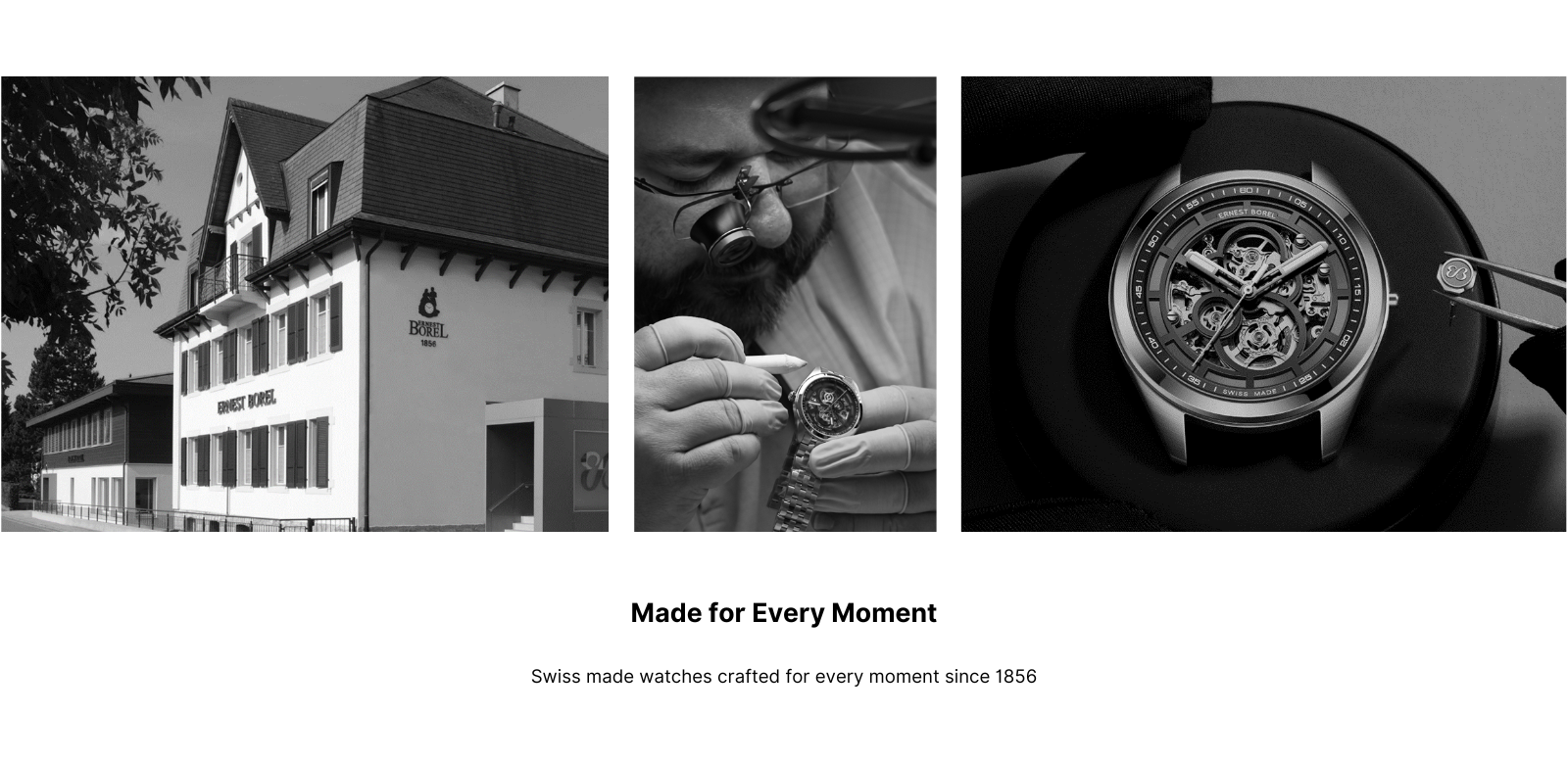
In 1856, young Jules Borel who had a passion for perfection, began his long career as a watch maker in Neuchâtel – one of the birthplaces of Swiss watchmaking. Three years later, in 1859, he founded Borel & Courvoisier with his brother-in-law, Paul Courvoisier. In the workshops of the new company, numerous experienced craftsmen polished watchcases with the help of precision tooling machines designed by the famous manufacturing procedures expert Gusta Pede Pierre, while the professional Fedler Visa encouraged the installation of music boxes in their products. Through their creative talent, the craftsmen in the company bear witness to these watchmaking revolutions that would breathe a new personality into timepieces.
The company sent its first shipment of watches to Uruguay in 1860, thus establising its first market in South America. In 1867, the network extended to Spain and continued to expand rapidly. From its very beginnings, Borel & Courvoisier was aware of the important influence of the Neuchatel Observatory in the world of precision watchmaking. If their products could be approved, they would undoubtedly obtain a global sales certificate for their products. So, ten years later, in 1866, it was a proud achievement when their products were awarded no. 1 in a competition organized by the Neuchâtel Observatory. This award consolidated their position as internationally renowned watch makers.
From then on, a series of credentials came one after another, gratifying their tremendous efforts: in 1876, their products were granted First prize in Philadelphia (USA) for the high quality of their watches and in 1878 in Paris, France, the only Gold medal ever obtained by the Swiss clock/watch industry. It was during this period that a revolutionary creation emerged: clocks and watches were geared by a crown with a push-piece. This invention included a new gear system and time-setting technique. This patent was a milestone in the history of watchmaking.

In 1894, Paul Courvoisier retired and Jules Borel’s son, Ernest Borel, took his place. The company is renamed Borel-Courvoisier. Four years later, Ernest Borel and Adamir Debrot, the technical director, take over the management of the company together and change its name to Ernest Borel & Cie.
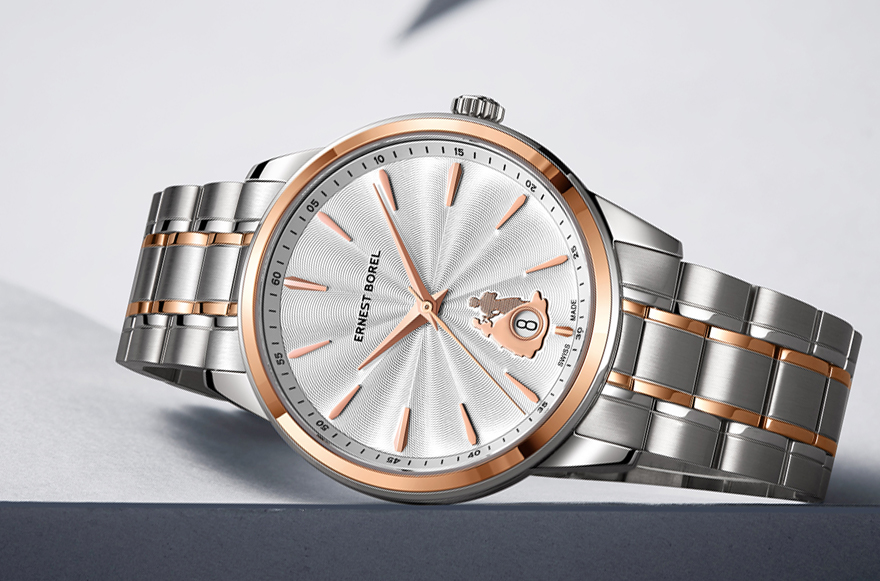
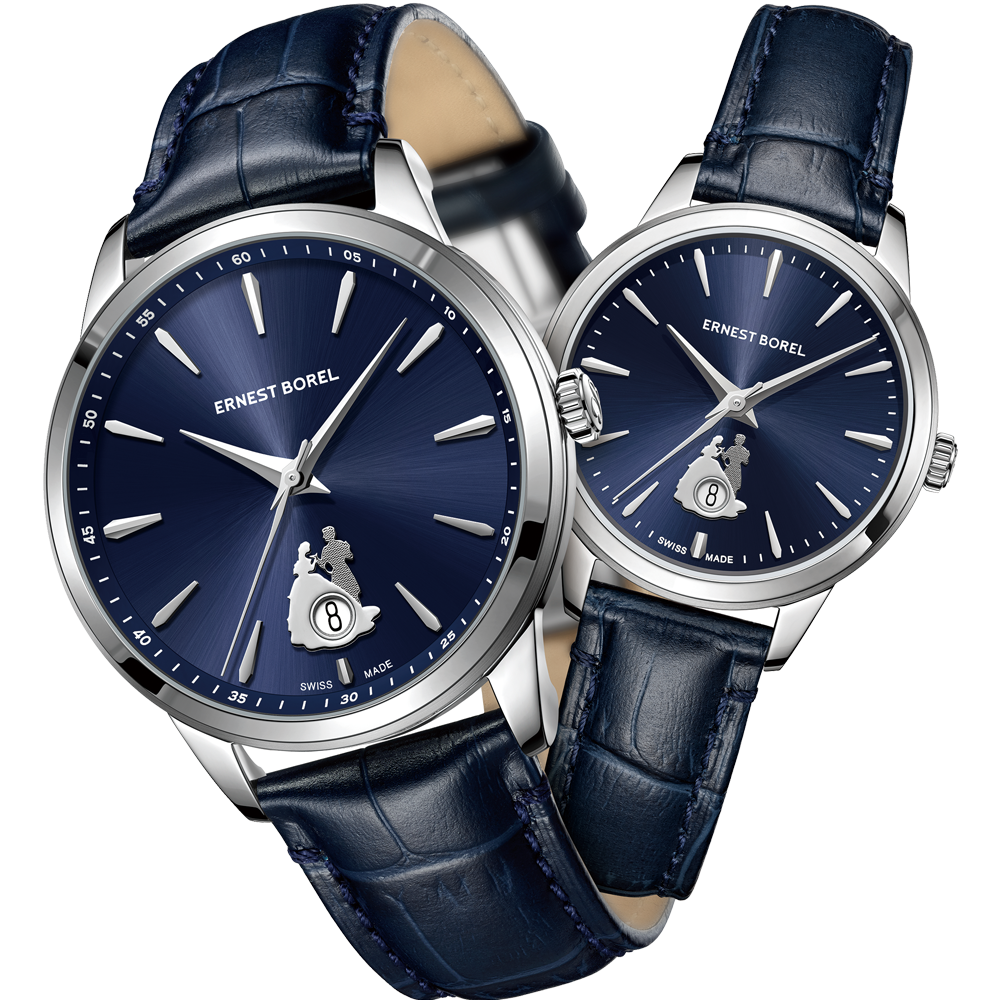
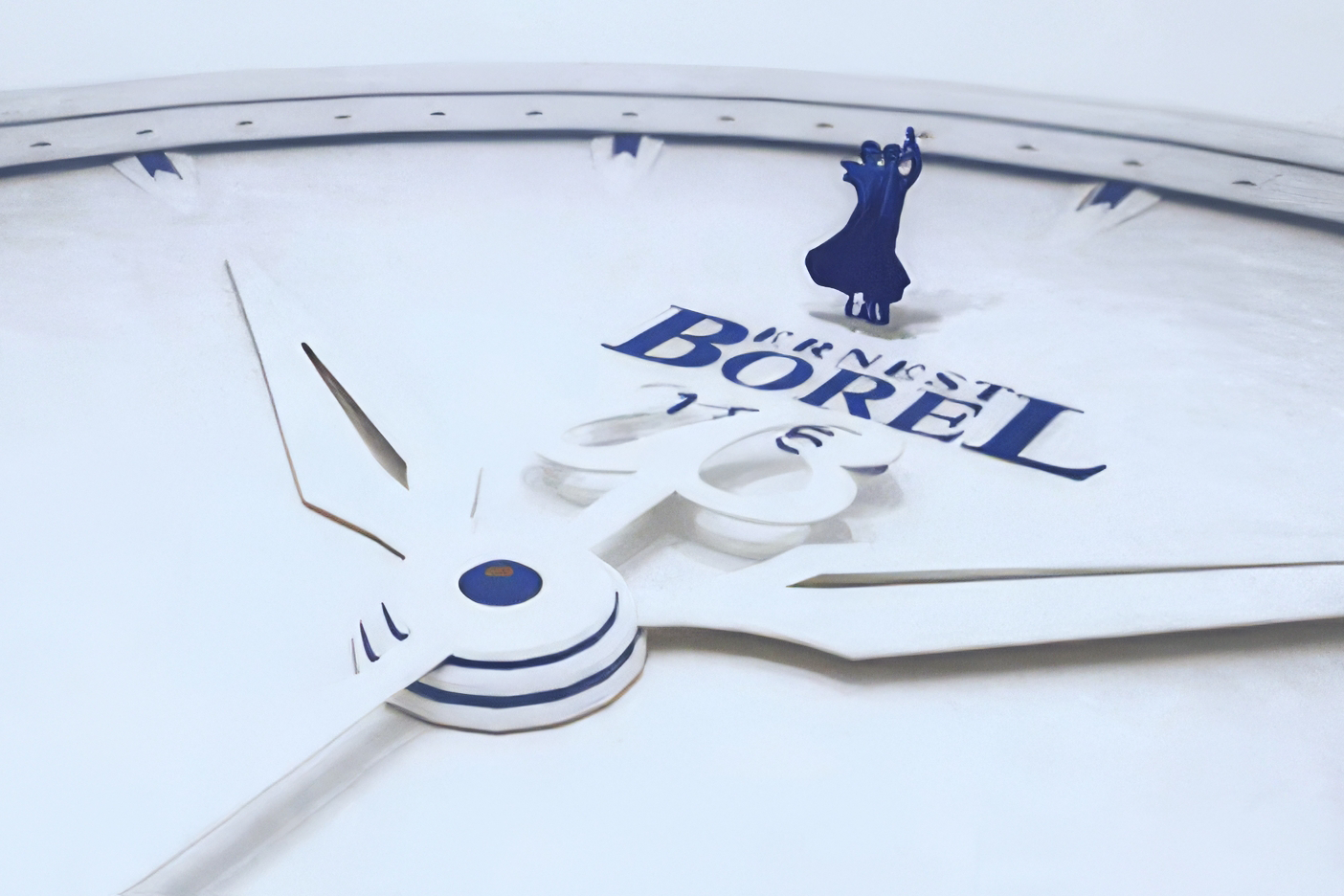
A new chapter in the history of Ernest Borel begins shortly thereafter when its products are linked with a lovestory. Ernest Borel met a beautiful young woman at a ball and invited her to dance. The elegance and harmony of the young couple circling to the rythms of dance steps attracted everyone’s attention. A photographer couldn’t resist the temptation to immortalise this vision of an almost perfect harmony. The snapshot of this romantic scene acted as a flash of inspiration for Ernest Borel, who decided to transmit via the association of the image of dance steps with his watch brand, the image of a long long passion in the quest for perfection.
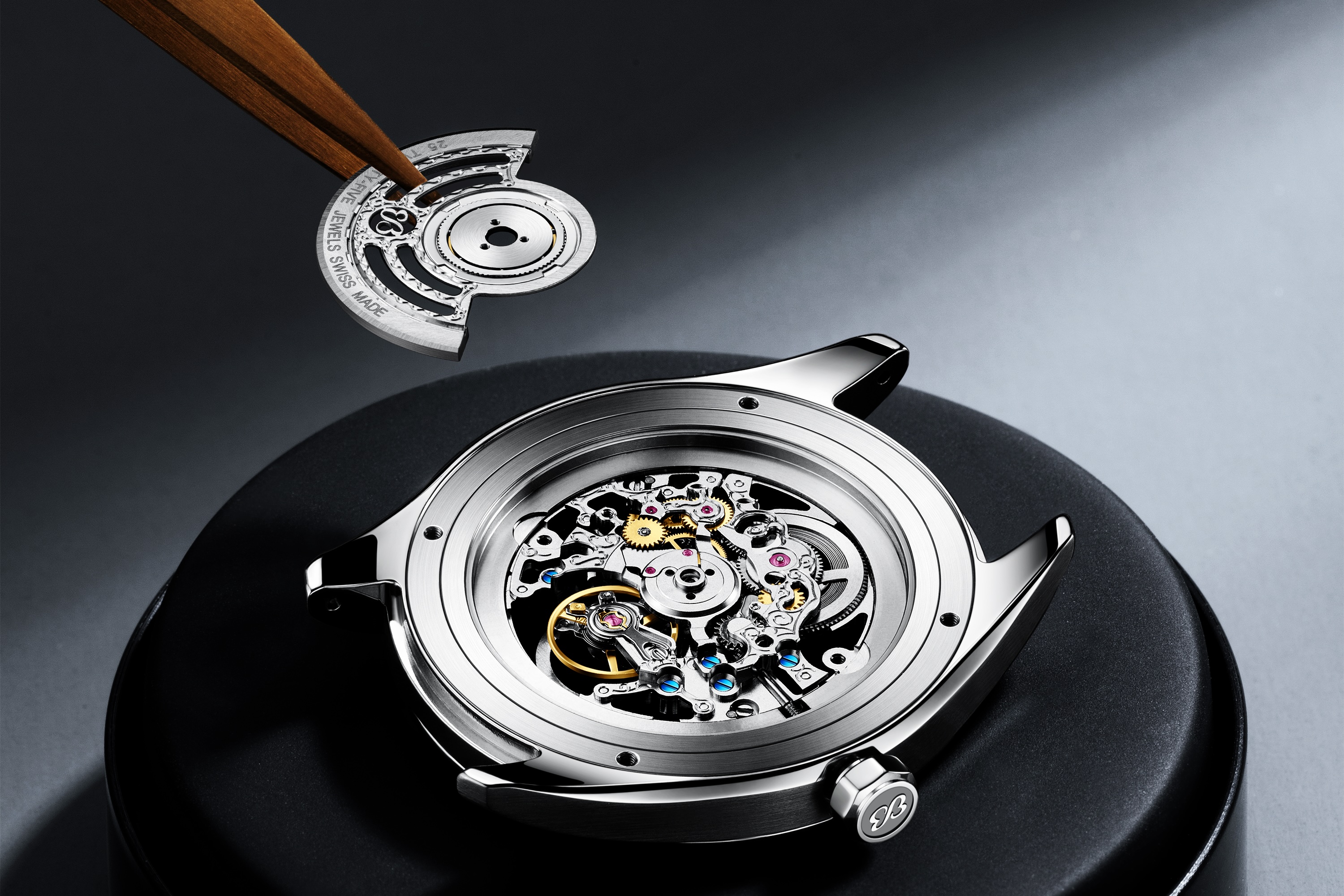
Thanks to a constant search for innovation and the improvement of cogs and other movement parts, the precision and quality of Ernest Borel watches is dramatically improved. Like the immutable rotation of the planets around the sun, the precision functioning of Ernest Borel watches symbolizes the highest technological level in watchmaking. The constant improvement of production techniques is the very source of their extraordinary product development.
In parallel, the company was constantly expanding its sales network and developping its international market. Confident in a family strategy of foresight and sagacity, Ernest Borel would successfully extend its sales to the American, European, Indian and Asian continents.
In 1903, 388 Ernest Borel watches are sold in China, weaving an indissoluble link between Ernest Borel Chinese civilisation. This first entrance by Ernest Borel in Chine is even now exposed in the International Watchmaking Museum in La Chaux-de-Fonds, , the famous “watchmaking metropolis” in the canton of Neuchâtel, Switzerland. In spite of long periods of economic depression brought on by the two world wars, Ernest Borel developed without interruption. And, although at the beginning of the 20th century it had to cancel its plans for expansion in the Far East due to wars, the company would nevertheless continue its ascention through constant improvements and innovations.
Having entered the company in 1927, Jean-Louis Borel, Ernest’s son, would take its reins in 1936, modifying the articles of the association to create a “Co. Limited”. The new Board of directors, made up of the chairman Ernest Borel, the general manager Jean-Louis Borel and the technical director Adamir Debrot, would mark an important step in the development of Ernest Borel watches. From then on, the brand would launch, during the following decades, timepieces that were closely linked with a tradiction of excellence, leading-edge technology and manufacturing tools that were always more professional and efficient.
During this period, the reputation of Ernest Borel watches would never cease to grow. The prizes and awards accumulated. In 1937 it was the Grand Prize, awarded in Greece; from 1945 to 1958, 4172 Ernest Borel watches received the “Bulletin de marche” certificate from the Neuchâtel Observatory. Two models of Ernest Borel chronometers were also awarded, in 1958, the First prize for Precision from this same Observatory. And so the Ernest Borel watch brand succeeded in making its own the values of precision and reliability, quality and durability, elegance and user-friendliness in the eyes of its admiring clientele.
The brand’s strong position in the watchmaking industry is based upon its values. And, day by day, Ernest Borel products evolve, coming very close to perfection thanks to this creative spirit that is constantly in search of improvement, basing itself upon high-technology manufacturing procedures vwhile respecting traditional Swiss watchmaking.
After the deep-rooted reform that followed the Chinese revolution, the opening of the Chinese market to the outside world in the 1980’s allowed Ernest Borel to adapt its concept of romantic and prestigious watches to the tastes and the traditional culture of its Chinese clientele, thus reinforcing its presence in the ancient “Middle Kingdom”.

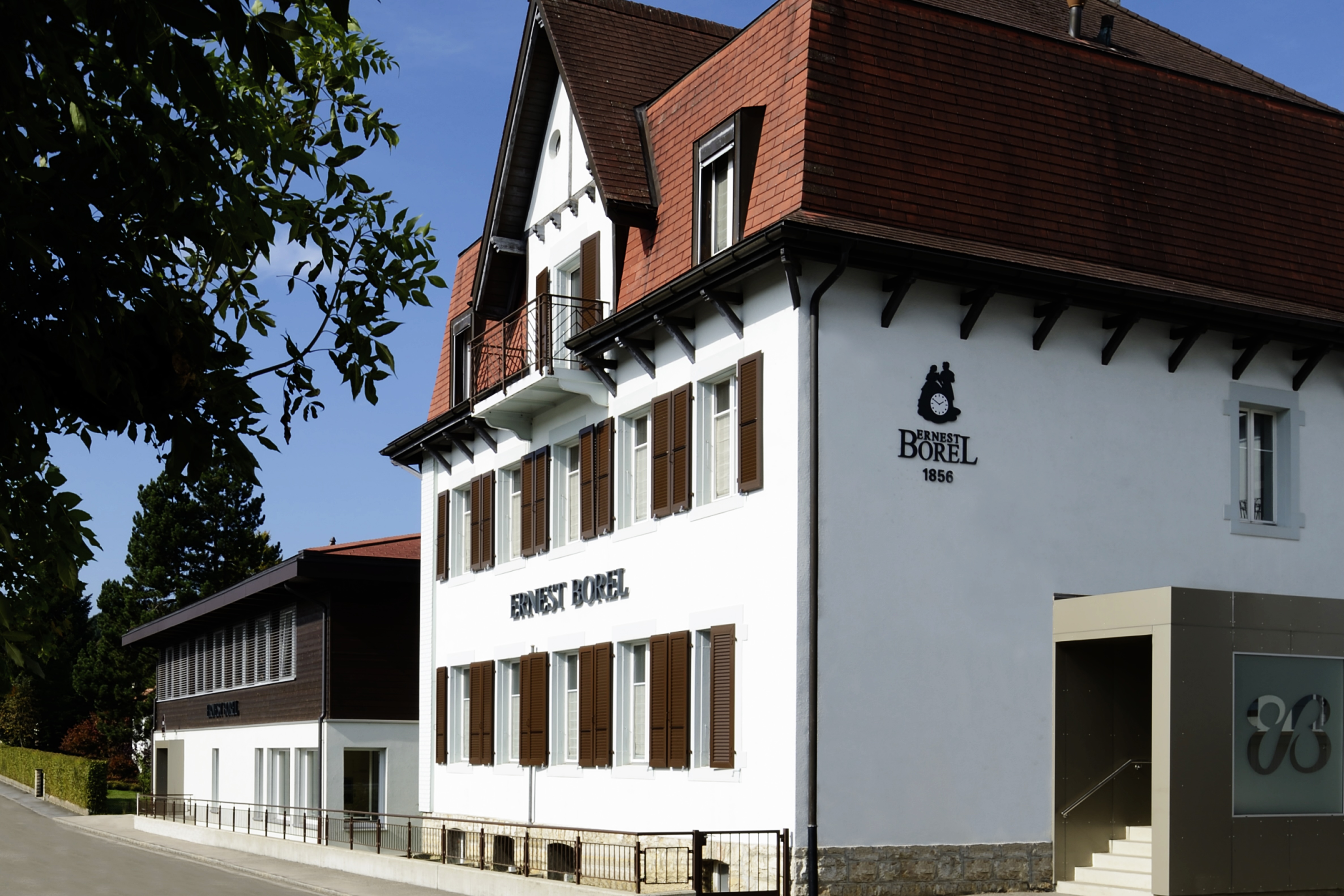
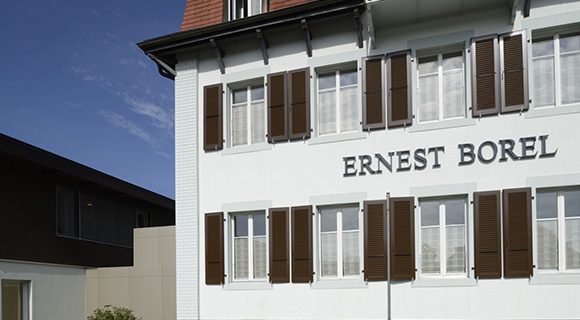
The profoundly romantic image, which Ernest Borel so elegantly associated with the brand at the beginning of the 1900’s, is so well anchored in clients’ minds that it has become the inescapable signature of Ernest Borel watches. The romance uniting two loving hearts to the rythme of dance steps, the romantic themes of love and friendship, linked to the passing of time, punctuate the history and life of Ernest Borel watches. Admittedly, times and styles change, techniques evolve, and Ernest Borel, installed in its new headquarters in Le Noirmont since 2009, in the very heart of the Franches mountains in the canton of Jura, Switzerland, follows these evolutions of time and fashion in order to always meet the desires of its clientele.
All materials and parts are carefully inspected at every step in the manufacturing process to ensure that each element is perfect. Every movement is meticulously inspected and must meet stringent requirements. The watch case fitting is submitted to special tests to ensure pressure resistance in order to guarantee watertightness. Every Ernest Borel watch is checked according to strict procedures before being commercialised.
Depositing the beauty of time and the delivery of a cultural treasure along with continual efforts of three generations, Ernest Borel has consistently followed the initial spirit of the enterprise and the belief of creating perfection. Not only is it very meaningful for the clock/watch industry, but it also provides an unchangeable life-style for those who pursue perfection, fashion and romance.
As an agent delivering the beauty of time and cultural treasures, Ernest Borel has, over the course of more than a century and a half, perpetuated the initial spirit of the company based upon a belief in perfection which was dear to its founders. This approach is very significant in relation to the Swiss watchmaking tradition and also aims to satisfy a lifestyle that is inalterable in its beauty for a clientele that strives for this kind of perfection, yet also for the beauty of fashion and the romantic side of life.